Vi deler ikkje verdiar med ein fascist, sjølv om han sit i Det kvite huset.
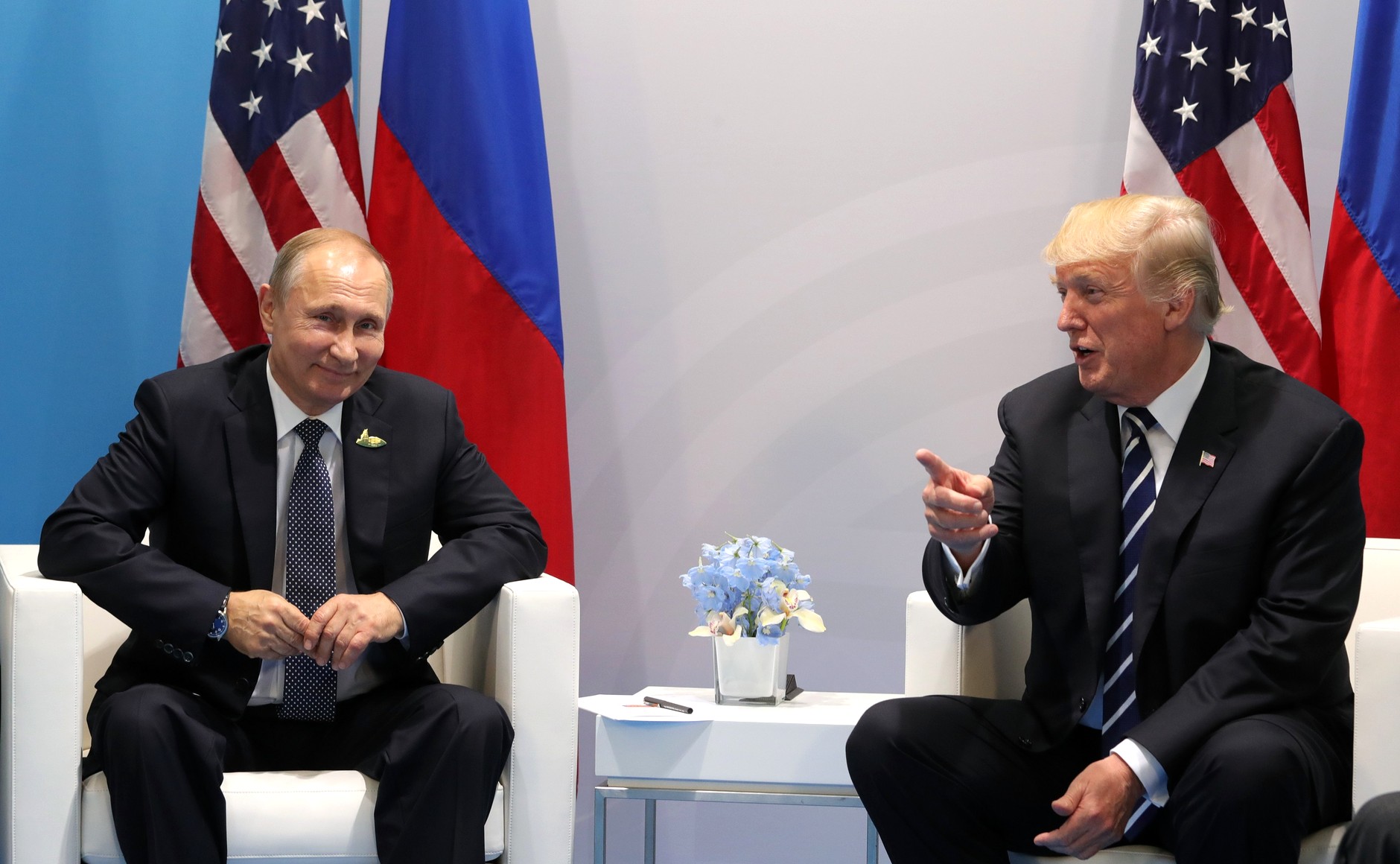
Statsminister Jonas Gahr Støre uttalte nyleg at forholdet mellom Noreg og USA framleis byggjer på eit verdifellesskap. Det fekk meg til å tenke på den pensjonerte marinegeneralen John Kelly, som var stabssjef for president Donald Trump frå 2017 til 2019. Han sa i fleire intervju to veker før valet i fjor at Trump passar “den generelle definisjonen av ein fascist”. Til The New York Times sa han dessutan at presidenten “klart føretrekk ei diktator-tilnærming til politisk styring.” Til The Atlantic opplyste Kelly at Trump hadde sagt at at han ønska at militært personell viste han same lydnad som tyske generalar viste Hitler under andre verdskrig.
Trumps kampanjestab nekta sjølvsagt for at han nokon gong hadde sagt noko slikt. Dei sjokkerande utsegnene og handlingane hans sidan han tok over Det kvite huset 6. januar får meg likevel til å tru at dei laug. Spørsmålet er då i kva grad det er, og ikkje minst blir, råd å skilje mellom Trump som president og USA som Noregs hittil viktigaste allierte land.
Trump vart vald med 49,8 prosent av dei avgitte røystene i valet i november 2024. Valdeltakinga var på 63,9 prosent. Det betyr at i underkant av 32 prosent av alle røysteføre amerikanarar røysta på Trump. Altså mindre enn ein tredel. Slik sett er ikkje Trump representativ for USA.
Vi kan derfor håpe på at den hittil nokså tause amerikanske majoriteten, om ikkje rettsvesenet, etter kvart vil sette bom for herjingane til “oransjemannen”. Personleg trur eg mest på det. Men håp er greitt, ønsketenking er noko anna. Det kan vi ikkje basere oss på. Norsk diplomati må dessutan sjølvsagt prøve å gjere det beste ut av situasjonen og vere forsiktig med retorikken.
I våre interne, realpolitiske vurderingar må vi likevel ta høgde for verstefall-scenariet, som er at Trump får det som det ser ut til at han vil. Det vil mellom anna seie å regjere USA eineveldig og på livstid, rasere den amerikanske staten, servere Ukraina til Russland på eit sølvfat, ta USA ut av Nato, dele verda inn i interessesoner mellom USA, Russland og Kina, samarbeide med Putin, Orban og andre høgreradikale, nasjonalistiske antidemokratar, aktivt undergrave liberalt demokrati og den etablerte verdsordninga, aktivt motarbeide EU («som vart grunnlagt for å ta rotta på USA»), og å melde USA ut av FN.
For Noreg og det meste av Europa ville det bety at USA blir ein motstandar, ikkje ein venn. Konsept som “Vesten”, “den frie verda” og “ein rettsbasert verdsorden” vil vi i så fall måtte gløyme. Europa og nokre få andre land ville stå aleine igjen som forsvararar av det liberale demokratiet.
Det er ikkje berre Trumps personlegdom som talar for eit slikt scenario, men også djuptgripande, langsiktige samfunnstrendar i USA. Det framgår mellom anna av boka The Abandonment of the West: The History of an Idea in American Foreign Policy, utgjeven i 2019 av Michael Kimmage. Kimmage er professor i historie og direktør for Kennan-instituttet ved Wilson-senteret i Washington DC.
Kimmage peikar på at dei amerikanske grunnlovsfedrane, med Thomas Jefferson i spissen, var svært europaorienterte. USA såg seg heilt frå starten som eit opplysningstidsprosjekt og del av eit europeisk prega, demokratisk-liberalt “Vesten” som kjempa for fridom og demokrati mot eit barbarisk-despotisk “Austen”.
Men under president Bush d.y. byrja amerikansk utanrikspolitikk å avvikle Vesten-retorikken til fordel for ei meir “global” forteljing. Den kalde krigen var over og gjensidig økonomisk avhengigheit auka. Dessutan måtte ikkje kampen mot islamistisk terrorisme framstå som eit nytt vestleg krosstog. I tillegg vart den amerikanske venstresida stadig meir vest- og kulturkritisk og anti-kolonialistisk (woke) samstundes som ekstreme, nasjonalistiske og isolasjonistiske krefter styrka seg på høgresida.
I valkampen i 2016 profilerte Donald Trump seg som faneberar for det nye, nasjonalistiske høgre. Han dumpa republikanaranes og demokratanes tidlegare felles ideal om Vesten som forkjempar for fridom, multilateralisme og ein rettsbasert verdsorden til fordel for ei etnisk-religiøs førestilling om Vesten. Vesten hadde ifølgje Kimmage nå gått frå å vere ein samlande idé til å vere ein splittande eller døyande idé (s. 19).
Korleis klarte dei nasjonalistiske og ekstreme høgrekreftene Kimmage viser til å få Trump vald til president, først i 2016, så igjen i 2024, og samstundes fullstendig overta Det republikanske partiet? Den erfarne gravejournalisten Katherine Stewart forklarar det I si mykje omtalte, nyleg utkomne bok Money, Lies and God. Inside the Movement to Destroy American Democracy (2025).
Stewart skriv at framveksten av den antidemokratiske politiske rørsla i USA er “the big story of our time”. Det Stewart kallar «the new American fascism» er ei samansett og komplisert rørsle, men ho har éin samlande idé: Full avvising av opplysningstidsideala som den amerikanske republikken vart grunnlagt på. Rørsla representerer “the most serious threat to American democracy since the Civil War. It is best described as a new and distinctly American variant of authoritarianism or fascism” (s. 2).
Det er verdt å sitere vidare og in extenso frå den oppsummerande innleiinga til boka:
(The movement) “fundamentally does not believe in the American idea…. It claims that America is dedicated not to a proposition but to a particular religion and culture. It asserts that an insidious and alien elite has betrayed and abandoned the nation’s sacred heritage. It proposes to “redeem” America, and it acts on the extreme conviction that any means are justified in such a momentous project. It takes for granted that certain kinds of Americans have a right to rule, and that the rest have a duty to obey. No longer casting the United States as a beacon of freedom, it exports this counterrevolutionary creed through alliances with leaders and activists who are themselves hostile to democracy. This movement has captured one of the nation’s two major political parties, and some of its leading thinkers explicitly model their ambitions on corrupt and illiberal regimes abroad that render education, the media, and the corporate sector subservient to a one-party authoritarian state.” (s. 3)
… “American democracy is failing because it is under direct attack, and the attack is not coming equally from both sides. The movement described in this book isn’t looking for a seat at the noisy table of American democracy; it wants to burn down the house. It isn’t the product of misunderstandings; it advances its antidemocratic agenda by actively promoting division and disinformation. In the pages that follow, I will bring the receipts to support these uncomfortable facts. For now, I will venture that few who have familiarized themselves with this movement will be tempted to minimize the danger it represents to our collective well-being.” (s. 4)
… “The present crisis is deeply rooted in material changes in American life over the past half century. The antidemocratic movement came together long before Donald Trump descended on a golden escalator in 2015 to announce his candidacy for president. The outcome of the 2024 election only confirms the fundamental calculus described in this book. The forces hurling against American democracy will long outlive the current political moment, and they will continue to feast on the carcass of the Republican Party. Their various elements have emerged along the fissures in American society, and they continue to thrive on our growing educational, cultural, regional, racial, religious, and informational divides. Of particular note, the antidemocratic reaction draws much of its energy from the massive increase in economic inequality and resulting economic dislocations over the past five decades. In the middle of the twentieth century, capitalist America was home to the most powerful and prosperous middle class the world had hitherto seen. By the second decade of the twenty-first century, capitalism had yielded in many respects to a form of oligarchy, and the nation had been divided into very different strata. At the very top of the wealth distribution arose a sector whose aggregate net worth makes the rich men of earlier decades look like amateurs. Between 1970 and 2020, the top 0.1 percent doubled its share of the nation’s wealth. The bottom 90 percent, meanwhile, lost a corresponding share.” (s. 4-5)
… “My point is that the great disparity in wealth distribution is a significant contributor to the wave of unreason that has swept our politics and our culture. It has fractured our faith in the common good, unleashed an epidemic of status anxiety, and made a significant subset of the population susceptible to conspiracism and disinformation.” (s. 5)
… “They appear to operate on the cynical belief that manipulation of the masses through disinformation will enhance their own prosperity. The movement also draws in a sector of the professional class that has largely abdicated its social responsibility. Much of the energy of the movement, too, comes from below, from the anger and resentment that characterizes life among those who perceive, more or less accurately, that they are falling behind.” (s. 5-6)
… “The new politics aims for results that few people actually want and that ultimately harm everybody. Grounded in resentment and unreason, the new American fascism is more a political pathology than a political program.” (s. 6)
… “The psychic payoff that the new, antidemocratic religious and right-wing nationalism offers its adherents is the promise of membership in a privileged “in-group” previously associated with being a white Christian conservative, a supposed “real American,” with the twist that those privileges may now be claimed even by those who are not white, provided they worship and vote the “right” way. At the same time, I will also show the movement is the result of the concerted cultivation of a range of anxieties that draw from deep and wide roots.” (s. 6)
… “This movement rejects the primacy of reason in the modern world at the same time that it rejects democracy. This is the darkest aspect of the phenomenon, and I describe it only after having grimly ruled out more charitable explanations. The bulk of this movement is best understood in terms of what it wishes to destroy rather than what it proposes to create. Fear and grievance, not hope, are the moving parts of its story. Its members resemble the revolutionaries of the past in their drive to overthrow “the regime”—but many are revolutionaries without a cause.” (s. 7)
… “There is no world in which America will become the “Christian nation” that it never actually was; there is only a world in which a theocratic oligarchy imposes a corrupt and despotic order in the name of sectarian values.” (s. 7)
… “what I have found in my reporting is that this is a leadership-driven movement, not merely a social phenomenon. A central finding in this book is that the direction and success of the antidemocratic movement depends on its access to immense resources, a powerful web of organizations, and a highly self-interested group of movers and backers. It has bank accounts that are always thirsty for more money, networks that hunger for ever more connections, religious demagogues intent on exploiting the faithful, communicators eager to spread propaganda and disinformation, and powerful leaders who want more power. It takes time, organizational energy, and above all, money to weaponize grievances and hurl them against an established democracy—and this movement has it all.” (s. 8)
… “In revealing moments—like when the academically well-polished leader of the Heritage Foundation declared that the “second American Revolution” that he and his fellow Trump supporters are leading “will remain bloodless if the left allows it to be”—it becomes clear that the Thinkers’ credentials are often thin cover for ferocious levels of aggression and insecurity.” (s. 10)
… “Although it is at bottom a political ideology, moreover, Christian nationalism is not merely a policy program; it is perhaps best understood as a political mindset. That mindset, as I explain in further detail below, includes four basic dispositions: catastrophism; a persecution complex; identitarianism; and an authoritarian reflex.” (s. 12-13)
… “The core of their belief system is that democracy in its current configuration threatens their power and privilege—as well as freedom and prosperity for all, or so they like to add.” (s. 13)
Og til slutt i Stewarts innleiing:
“It would be nice to think that the movement will crumble under the weight of its internal contradictions, but that may be wishful thinking. Many such movements throughout history have destroyed the nations from which they arise before getting around to destroying themselves. The chief threat to American democracy comes from a kind of collective psychosis. The age of economic and cultural fracture has yielded a politics of unreason. But the politics of unreason is not a random walk. It unravels in a particular direction. Unreason is the first and last resort of the enemies of democracy. In the final analysis, the antidemocratic movement is a symptom, not a cause, of the American crises. This fact, as I will lay out in a brief afterword, can be a source of hope for the future. It can serve as a guidepost for the deep structural and organizational solutions that this crisis demands. In the meantime, I invite you to leave behind the land of political theory, buckle up, and join me on a journey through the madness and the beauty of the American political landscape” (s. 13-14).
Eg avstår frå forsøksvis kloke ord til avslutting, og lar heller dette henge i lufta til ettertanke.
 Europæus norvegicus
Kan vel trygt slå fast at vi går ei utfordrande tid i møte ( det klokast eg kjem på etter å ha lese denne teksten😨).
Ha fin helg.
Leidulv
Sendt fra min iPad